


Ottawa and Ontario have offered up to $469 million in public support for Honda’s next phase of vehicle manufacturing in Alliston, Ontario. The headline number around Honda’s own plan is $867 million, but the available announcements do not describe all of that amount as immediate factory spending.
That distinction is important for understanding what has been announced, what is expected to change at the plants, and what remains undisclosed.
The confirmed pieces
Innovation, Science and Economic Development Canada announced a $313-million contribution through the Strategic Response Fund on November 13. Ontario said it would contribute up to another $156 million. The two governments describe their support as backing Honda Canada’s $867-million plan for its Alliston operations.
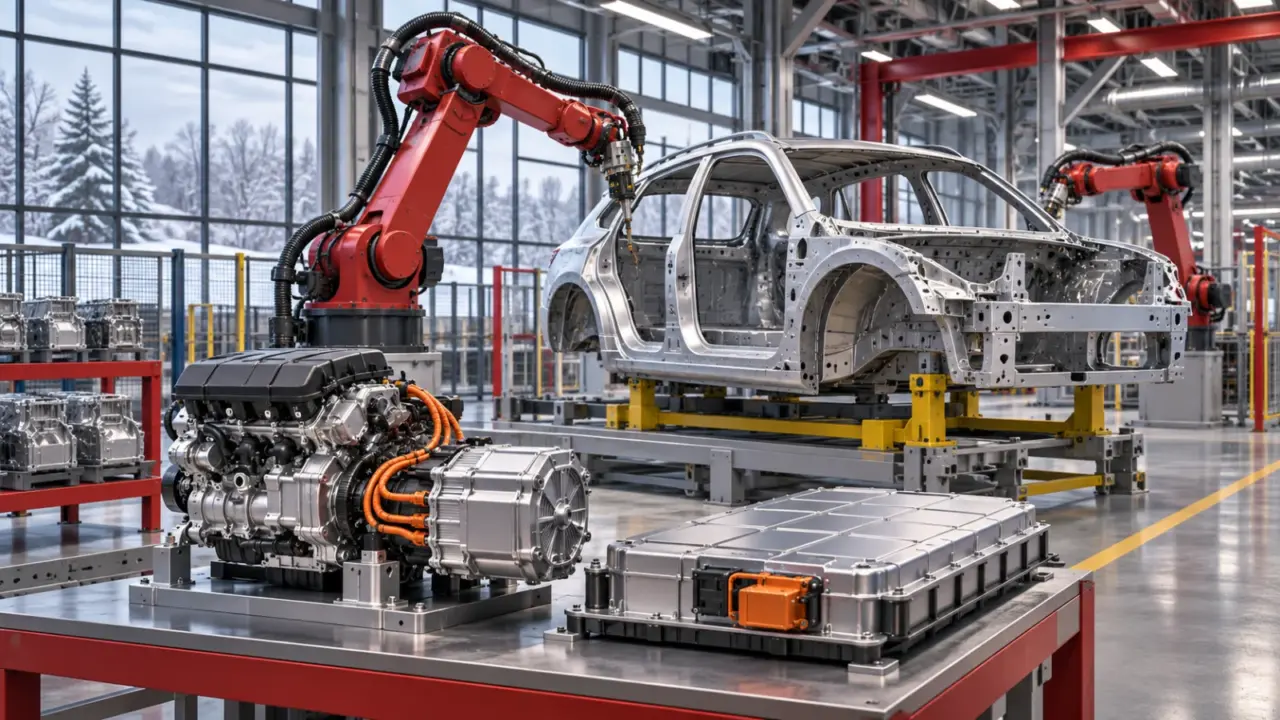
Honda’s own November 9 announcement identifies a narrower $166-million capital investment. The company says that money will fund upgrades and retooling for next-generation hybrid-electric and gasoline-powered models, including a return to engine manufacturing in Alliston.
Honda describes the $166 million as one part of a broader $867-million commitment that includes future planned investments and related expenses. The public releases do not provide a line-by-line breakdown of the remaining amount. Nor do they explain how every element of the two government contributions maps onto the company’s immediate capital work.
Adding the public commitments and Honda’s disclosed capital spending therefore does not produce a reliable account of the full project. The figures refer to overlapping but differently defined parts of the plan.
What changes at Alliston
The federal government says the project will support production of the next Honda Civic and CR-V, increase electrified-vehicle production, modernize manufacturing technology and provide training. Honda says its two Alliston facilities are being prepared for hybrid-electric and gasoline-powered vehicles, along with engines and hybrid systems.
The company currently builds petrol and hybrid versions of the Civic sedan on one line and the CR-V on another. Honda says the facilities have an annual capacity of more than 400,000 vehicles and produced 401,000 vehicles in 2025.
The announcements are about manufacturing flexibility rather than an immediate switch to battery-only production. Honda’s North American strategy remains centred on hybrids and gasoline models. The company said in May that it planned to introduce 15 new Honda and Acura hybrid models globally by 2030, with North America expected to be the main market for many of them.
Jobs maintained, not newly created
Government and company releases consistently frame the project as protecting or maintaining employment. Federal material says more than 4,000 jobs are expected to be maintained. Honda lists more than 4,000 associates, while the federal quick facts cite more than 4,200 workers at the two plants.
Those statements should not be read as a promise to create 4,000 new jobs. The public rationale is that retooling helps keep existing Canadian production competitive while U.S. tariffs and changes in vehicle demand put pressure on the North American auto supply chain.
Ontario also says the investment supports more than 50 suppliers and about 30,000 indirect jobs. Those are government estimates of the wider industrial footprint, not a count of positions created by this round of spending.
What the announcements do not settle
The releases do not give a detailed construction schedule, production start dates for the next-generation models, annual targets for hybrid output, or the conditions and milestones attached to each government contribution.
They also do not establish that every announced dollar has already been spent. Honda refers to future planned investments and related expenses, while Ontario’s support is described as up to $156 million.
For readers following Canada’s wider vehicle policy, the manufacturing package sits alongside a separate federal proposal to raise the luxury-tax threshold for qualifying zero-emission vehicles. That tax proposal concerns fully electric and hydrogen-powered vehicles; it does not convert Honda’s hybrid manufacturing plan into a zero-emission-vehicle project.
The measure of delivery will be more concrete: when retooling begins, which production lines change, when engine manufacturing returns, how the public contributions are disbursed and whether Alliston maintains its workforce and output through the transition.